The Input-Output Loop: Master Any Language by Using It (Not Just Studying It)

Have you ever found yourself in this frustrating cycle? You've downloaded three different language learning apps. You've memorized hundreds of flashcards. You've even paid for an expensive online course. But when the moment comes to actually use the language—to write a simple message, to understand a song, to express a genuine thought—your mind goes blank. The words you "learned" somehow evaporated.
Here's the truth: you don't have a memory problem. You have a method problem.
Traditional language learning treats your brain like a hard drive—just keep uploading vocabulary files and grammar rules until it's full. But that's not how human brains acquire language. We learn languages the same way we learned our first one: through meaningful input, active use, and constant reinforcement. Not through isolation, but through integration.
Today, I'm going to share a complete system that has helped thousands of self-directed learners break through their plateau and achieve genuine fluency. It's called the Input-Output Loop, and it transforms language learning from a tedious chore into a natural, enjoyable part of your daily life.
What You'll Learn
In this article, you'll discover:
- Why the Input-Output Loop works (and why traditional methods fail most learners)
- The four essential components of the loop and how they work together
- How to implement each stage with practical, actionable steps
- The science behind the method and why it aligns with how our brains actually acquire languages
By the end, you'll have a complete roadmap to transform scattered study sessions into a powerful, self-sustaining learning system.
Why Traditional Methods Leave You Stuck
Before we dive into the solution, let's understand the problem.
Most language courses are built on a faulty assumption: that studying about a language is the same as acquiring the ability to use it. This leads to what linguists call "learned helplessness"—you know the rules, you've seen the words, but you can't actually do anything with them.
The legendary linguist Stephen Krashen identified this gap in his Input Hypothesis. He discovered that we acquire languages not through conscious learning, but through comprehensible input—exposure to language we can mostly understand in meaningful contexts. But here's what most interpretations of Krashen's work miss: input alone isn't enough.
Think about it: how many English songs have you heard hundreds of times without learning English? How many movies have you watched with subtitles without becoming fluent? Passive input creates familiarity, not fluency.
The missing ingredient is active output—using the language for real communication, even if imperfectly. When you're forced to construct sentences, retrieve vocabulary, and express your own thoughts, your brain shifts from recognition mode to production mode. This is where true acquisition happens.
But there's still a problem: random output without reinforcement leads to fossilized errors and limited vocabulary. You keep using the same 100 words over and over.
That's why you need the complete loop.
The Four Pillars of the Input-Output Loop
The Input-Output Loop isn't just one technique—it's an interconnected system where each component amplifies the others. Here's how it works:
Pillar 1: Targeted Input (Learning Through Content You Love)
Instead of generic textbook dialogues, you immerse yourself in authentic content that genuinely interests you—songs, YouTube videos, podcasts, movie scenes. But here's the key: you don't just passively consume. You actively deconstruct the content, extracting vocabulary, phrases, and linguistic patterns.
Why songs work exceptionally well:
- Repetition built-in: Choruses and verses repeat, giving you natural spaced repetition
- Emotional connection: Music activates multiple brain regions, creating stronger memory associations
- Cultural context: You learn not just words, but how native speakers actually express emotions and ideas
- Manageable chunks: A 3-minute song contains 200-400 words—perfect for focused study
The process:
- First listen: Experience the song naturally, catch the overall vibe and any words you recognize
- Second listen with lyrics: Read along, highlighting words and phrases that intrigue you
- Deep dive: Look up meanings, analyze interesting grammatical structures, note cultural references
- Extract value: Identify 5-10 words/phrases worth remembering—not every word, just what resonates or seems useful
This isn't passive listening. You're training your brain to notice language patterns, to be curious about how native speakers express ideas.
Pillar 2: Personal Vocabulary Bank (From Encounter to Mastery)

Here's where most learners fail: they encounter a new word, think "oh that's useful," and then... forget it three days later.
Your Personal Vocabulary Bank solves this by creating a systematic bridge between "I've seen this word" and "I own this word."
The system:
Every time you encounter a word or phrase worth learning (from songs, videos, conversations, or reading), you immediately add it to your personal collection. But not just the word—you capture:
- The complete phrase or sentence where you found it (context is everything)
- Your own translation or explanation (personalization aids memory)
- An example sentence YOU create (this forces active processing)
- Optional: A memory hook (a silly image, a personal association, anything that makes it stick)
Tools that work:
- Anki: Perfect for spaced repetition, available on all devices, completely customizable
- Notion or Obsidian: If you prefer seeing all your vocabulary in one organized place
- Physical notebook: Never underestimate the memory benefits of handwriting
The golden rule: Review before you forget. Use spaced repetition algorithms (built into apps like Anki) that show you words right when you're about to forget them. This scientifically proven technique multiplies retention efficiency by 10x compared to random review.
Pillar 3: Active Output (Writing Your Way to Fluency)

Here's the component that transforms everything: daily language journaling.
This isn't about writing perfect essays. It's about forcing your brain to actively retrieve and use the words you've been inputting. Writing a journal in your target language creates a low-pressure practice space where you can experiment, make mistakes, and gradually build confidence.
Why journaling works:
- Personalized content: You're writing about YOUR life, making every sentence meaningful
- Retrieval practice: Trying to express your thoughts forces you to pull vocabulary from memory
- Pattern recognition: You quickly discover which words you actually know versus which ones you just recognize
- Progress tracking: Looking back at entries from months ago shows undeniable improvement
How to start (even as a beginner):
- Start ridiculously simple: "Today I woke up at 7am. I ate bread. The weather was good."
- Use template sentences: Create a list of 10-15 sentence structures you can reuse daily
- Deliberately incorporate: Try to use at least 2-3 words from your vocabulary bank each day
- Don't obsess over perfection: The goal is fluency, not flawlessness. Make mistakes boldly.
Progressive difficulty:
- Week 1-2: Basic facts (what you did, what you ate, weather)
- Week 3-4: Add simple opinions ("I liked...", "It was boring...")
- Month 2+: Describe feelings, future plans, imaginary scenarios
- Month 3+: Use phrases from songs/videos, experiment with idioms and metaphors
The beauty? Every journal entry is speaking practice on paper. The words you can write today are the words you'll speak tomorrow.
Pillar 4: Strategic Review (Closing the Loop)
This is where the "loop" becomes complete. All your efforts in input, vocabulary building, and output feed back into each other through regular, strategic review.
Weekly review cycle:
- Review your vocabulary cards: 10-15 minutes daily with your spaced repetition system
- Re-read old journal entries: Notice patterns in your mistakes, celebrate improvements
- Revisit favorite songs: You'll understand more each time, catch nuances you missed
- Identify gaps: What did you struggle to express in your journal this week? That's your input focus for next week.
This creates a self-correcting learning system. Your output reveals your weaknesses, which guides your input choices, which expands your vocabulary bank, which enriches your output. Round and round, constantly improving.
Why This Loop Creates Lasting Fluency
The Input-Output Loop aligns perfectly with how neuroscience tells us languages are actually acquired:
Comprehensible Input (Krashen's i+1 principle): By choosing songs and content slightly above your level, you're always learning in your "zone of proximal development"—not too easy, not too hard.
The Generation Effect: Creating your own example sentences and journal entries forces deeper processing than passive review. When you generate language, your brain forms stronger neural pathways.
Spaced Repetition: Your vocabulary bank with timed review fights the forgetting curve scientifically, ensuring words move from short-term to long-term memory.
Emotional Engagement: Learning through music and personal journaling creates emotional connections to words, which are far more memorable than sterile definitions.
Active Recall: Journaling forces you to retrieve words from memory rather than just recognizing them, which builds true fluency.
Your First 7 Days: A Starter Plan
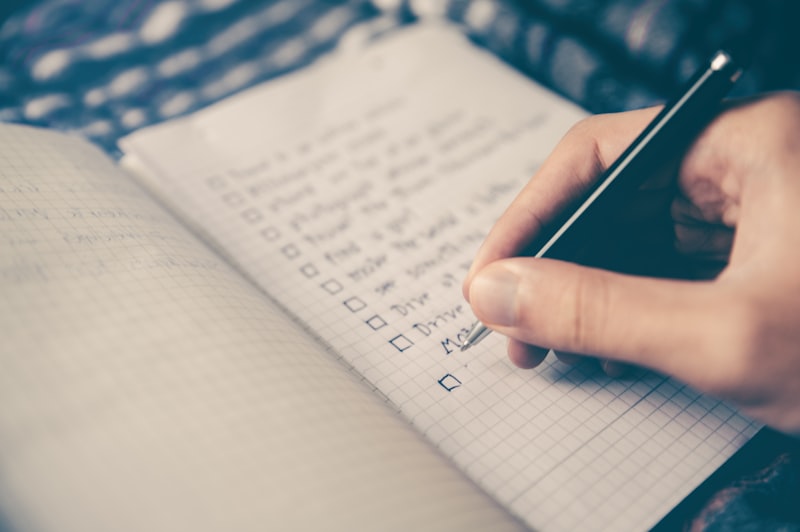
Ready to begin? Here's your concrete action plan for Week 1:
Day 1: Set Up Your System
- Choose your vocabulary tool (I recommend starting with Anki)
- Pick your first song (choose something you already love, even if it's a bit difficult)
- Buy a journal or create a digital document for your daily entries
Day 2-3: Deep Dive Your First Song
- Listen multiple times
- Read the lyrics carefully
- Add 10 new words/phrases to your vocabulary bank
- Write your first journal entry (even just 3 sentences about your day)
Day 4-7: Build the Habit
- 10 minutes each morning: review your vocabulary cards
- 15 minutes each evening: write a short journal entry trying to use at least one word from your bank
- Listen to your chosen song a couple more times passively (while commuting, cooking, etc.)
By Day 7: You'll have 10+ words in active memory, 4-5 journal entries written, and one song you understand deeply. That's more real progress than most people make in months of traditional study.
The Compound Effect: What Happens Next

Here's what makes the Input-Output Loop truly powerful: it compounds.
- In Month 1, you might learn 50 useful words and write 20 journal entries.
- In Month 2, with that foundation, you'll learn 80 words because you understand more context. Your journal entries will be longer and more natural.
- In Month 3, you'll start recognizing patterns automatically, creating sentences without conscious effort, and expressing complex thoughts.
In 6 months, people who stick with this system consistently report:
- Comfortable reading authentic content (articles, social media, novels)
- Ability to write fluently about daily life and familiar topics
- Vocabulary banks of 800-1,500 words in active use (compared to the 3,000 passive words they "learned" with traditional methods)
- Genuine confidence in their target language
The difference? These aren't words sitting idle in memory. They're words you've used, in contexts that matter to you.
Common Pitfalls (and How to Avoid Them)
Pitfall 1: "I need to understand every word in the song"
Reality: Focus on extracting 5-10 truly useful items per song. Quality over quantity.
Pitfall 2: "My journal entries are too simple/boring"
Reality: Simple is perfect. Olympic athletes still practice basic drills. Consistency beats complexity.
Pitfall 3: "I don't have time for all this"
Reality: The loop requires 20-30 minutes daily. Less time than one Netflix episode. And it's actually enjoyable because you're engaging with content you love.
Pitfall 4: "I'm making too many mistakes in my journal"
Reality: Mistakes are data. They show you what to focus on next. Perfect practice doesn't exist; productive practice does.
Your Invitation to Real Fluency
The language you want to speak is waiting for you. Not trapped in a textbook, but alive in the songs you love, the videos you watch, and the thoughts you want to express.
The Input-Output Loop doesn't require special talent, expensive tutors, or endless hours. It requires something simpler and more valuable: a system, and consistency.
You have the system now. The consistency part? That's where your journey begins.
Start today. Choose one song. Add five words to a new vocabulary bank. Write three sentences about your day. Twenty minutes, maximum.
Do it tomorrow. And the day after. Watch what happens.
What's your biggest challenge with language learning right now? Drop a comment below—I read and respond to every one. And if you found this helpful, share it with someone who's struggling to move beyond "basic learner" status.
In the next article, we'll dive deep into the art of deconstructing songs—exactly how to analyze lyrics to extract maximum learning value, with real examples in multiple languages. Subscribe so you don't miss it.
The loop starts now. Welcome aboard.